
SCIENCE
Tradition supported by research, data, and technology.
Alongside traditional practices, Mexican coffee production increasingly integrates scientific knowledge and technical expertise.
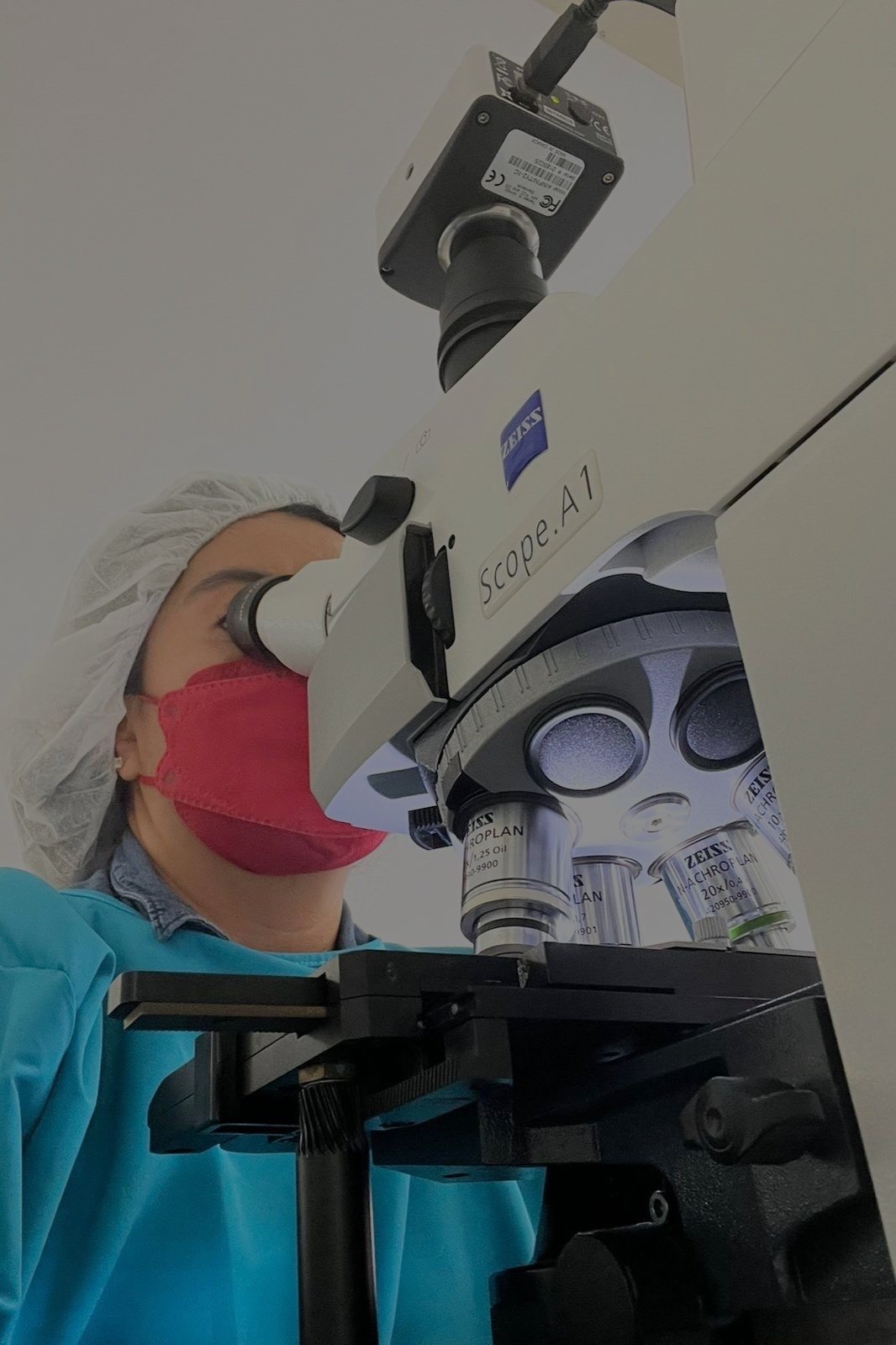
Universities, research centers, and producers collaborate to better understand processing, fermentation, and quality control.
This connection allows for greater consistency and transparency, without disconnecting coffee from its origin.
Science does not replace tradition — it helps explain and refine it.
Exploradores de Café approaches coffee as a product of both experience and understanding.
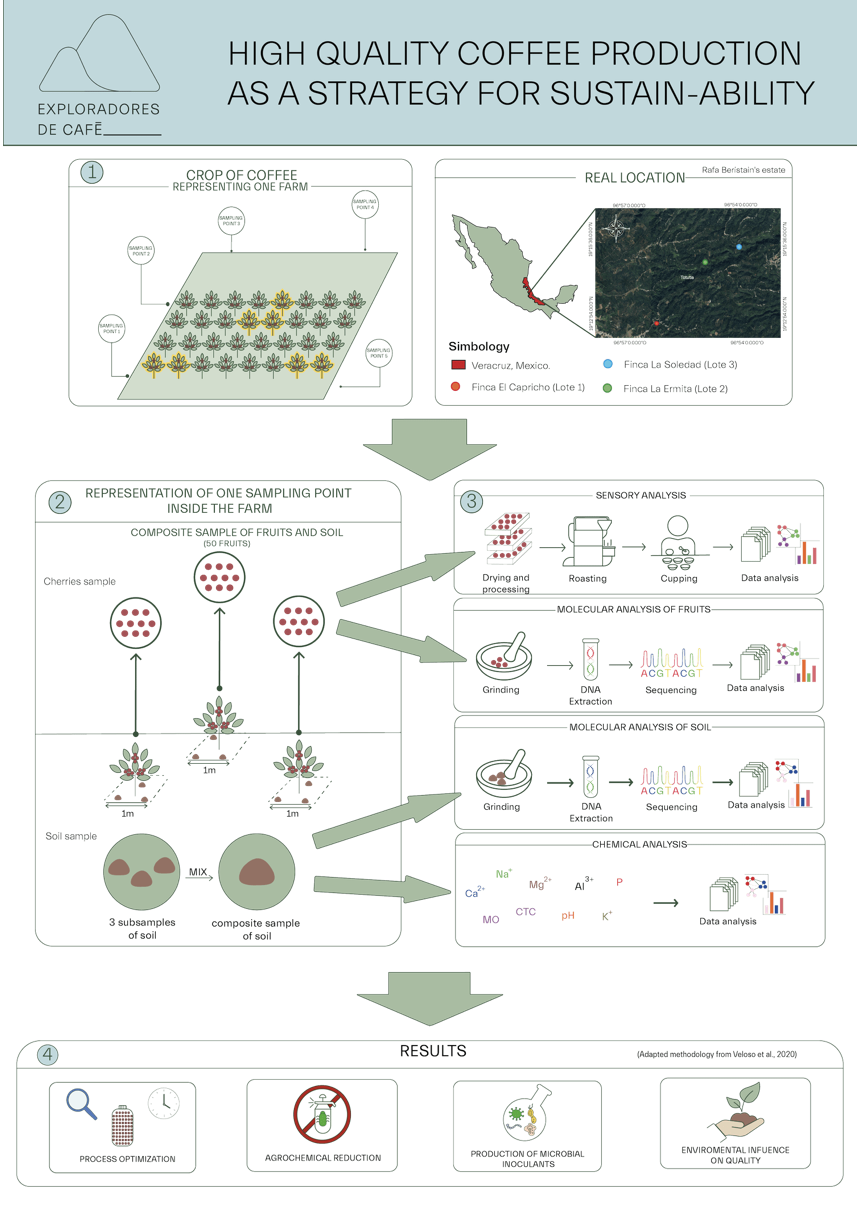
This project shows how high-quality coffee production can be used as a strategy for sustainability, combining fieldwork, science, and data-driven decision-making.
The study focuses on a single coffee farm in Veracruz, Mexico, where multiple sampling points are established across different plots. From each point, coffee cherries and soil samples are collected and combined into representative composite samples.
These samples undergo several types of analysis:
Sensory analysis, including processing, roasting, cupping, and data evaluation.
Molecular analysis of coffee fruits and soil, using DNA extraction and sequencing to understand microbial and genetic diversity.
Chemical soil analysis, measuring nutrients, pH, organic matter, and other key indicators.
Results
By integrating these analyses, the project enables:
Optimization of production processes
Reduction in agrochemical use
Development of microbial inoculants
A deeper understanding of how environmental factors influence coffee quality